What “optimized” means to end users
A premium mixing tank is an important starting point.
An optimized liquid process system is where real operational value is created.
As manufacturers scale production, they often discover that the tank itself is only a small part of the overall challenge. Time, cost, risk, and performance are driven by how well the entire process system is engineered, integrated, tested, and installed.
This is where optimized, factory-built, skid-mounted liquid process systems fundamentally change outcomes.
What Does “Optimized” Actually Mean?
In the context of a liquid process system, optimized does not mean “feature-rich” or “over-engineered.”
For an end user, optimization means:
The process system is engineered, manufactured, and tested as a complete unit so that it performs exactly as intended—efficiently, repeatably, and predictably—from day one.
An optimized system:
- Is designed specifically for the product and process
- Does not take a PhD to operate
- Has all components sized and selected to work together
- Uses integrated controls to monitor and drive performance
- Eliminates unnecessary complexity
- Delivers consistent, repeatable results batch after batch
Optimization is measured in uptime, throughput, consistency, and ease of operation—not in the number of components.
From Mixing Tank to Optimized Process System
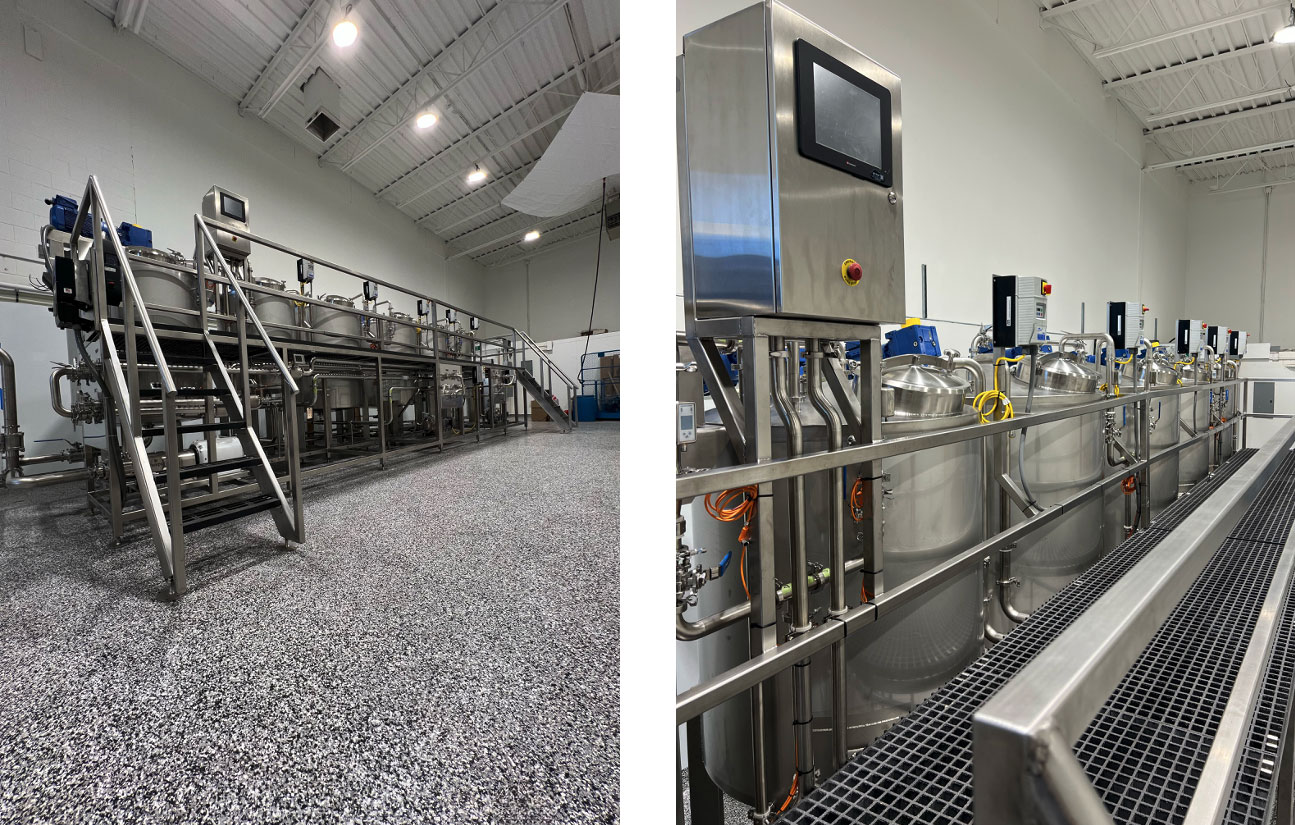
An optimized liquid process system goes well beyond a tank and agitator. It is a fully integrated solution, typically including:
- Mixing tank(s)
- Agitation and drive systems
- Pumps and valves
- Instrumentation (level, temperature, flow, pressure)
- Control panels and automation
- Structural skid and supports
- Interconnecting piping and wiring
Everything is designed together, built together, and tested together.
This systems-level approach removes the guesswork that often plagues field-built installations.
Integrated Controls: Where Optimization Becomes Real
One of the defining features of an optimized system is integrated controls.
Rather than relying on manual operation or loosely connected components, an optimized skid-mounted system uses controls to:
- Monitor critical process variables
- Enforce repeatable sequences
- Maintain setpoints automatically
- Protect equipment and product
- Provide operators with clear, actionable feedback
For the end user, this means:
- Reduced operator variability
- Faster training
- More consistent product quality
- Better data for process improvement
Controls are not an add-on—they are a core part of optimization.
Factory Assembly and FAT: Optimization Before Installation
Optimization only works if the system performs as promised.
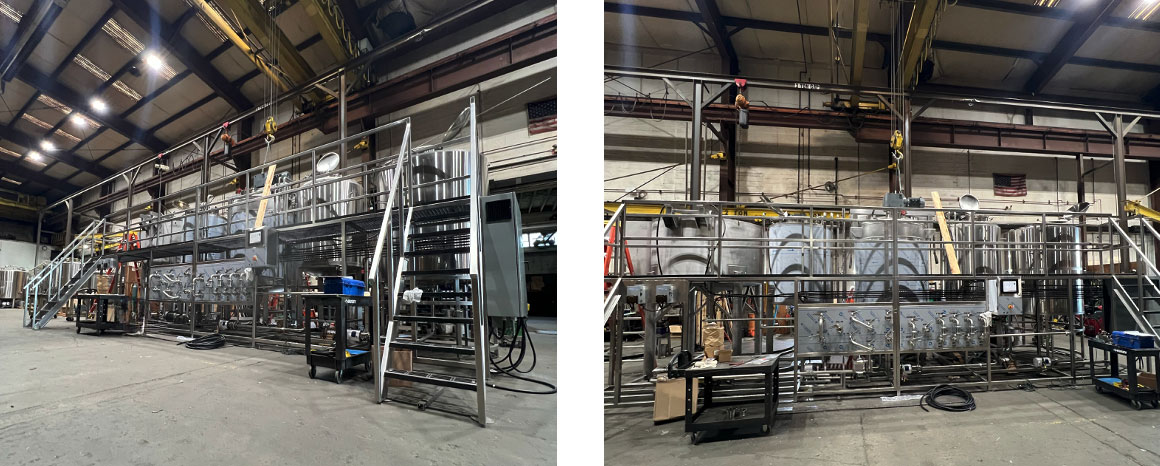
That’s why factory assembly and Factory Acceptance Testing (FAT) are critical. Before shipment, an optimized system is:
- Fully assembled
- Fully wired and plumbed
- Powered and exercised
- Tested under simulated operating conditions
During FAT:
- Mixers and pumps are run
- Control logic is verified
- Instrumentation is validated
- Interlocks and safety features are tested
Issues are resolved in the factory, not on the customer’s production floor. This is a key part of delivering an optimized system with predictable performance.
Optimized Installation: Weeks Reduced to Days
One of the most tangible benefits of an optimized, skid-mounted system is how easily it installs. Traditional field-built systems often require:
- Multiple contractors over extended periods
- On-site fabrication and wiring
- Troubleshooting during commissioning
By contrast, an optimized skid-mounted system installs like a single piece of equipment.
What End Users Can Expect
Because the system arrives fully assembled and tested:
- The skid is set in place
- It is anchored
- Utilities are connected
In most cases, installation requires only one utility connection per functional area, typically:
- Electrical
- Process piping
- Utilities (water, steam, glycol, air)
This allows electrical, plumbing, and mechanical contractors to complete installation as quickly as a single day, rather than weeks.
Where the Time and Cost Savings Come From
Time Savings
- No on-site assembly of components
- Minimal contractor coordination
- Faster commissioning
- Faster production startup
Weeks of field work are often reduced to days.
Cost Savings
- Fewer on-site labor hours
- Reduced installation risk
- Less rework and troubleshooting
- Predictable startup costs
While optimized systems may carry a higher upfront equipment cost, the total installed cost is often significantly lower than a field-built alternative.
What End Users Should Expect From an Optimized System
A properly optimized liquid process system should deliver:
- Predictable, repeatable batch performance
- Short installation and startup timelines
- Reduced operational variability
- Clear, intuitive operator interfaces
- Long-term reliability and serviceability
Most importantly, it should work as promised, without constant adjustment or intervention.
The MTUSA Approach to Optimization
At Mixing Tanks USA, optimization means engineering the entire process—not just supplying equipment.
That includes:
- Designing tanks, mixers, piping, and controls as a single system
- Manufacturing and assembling systems in our facility
- FAT testing systems before shipment
- Delivering equipment that installs quickly and performs consistently
Optimization is not about adding complexity. It’s about removing uncertainty.
The Bottom Line
An optimized liquid process system is not just easier to install—it is easier to operate, easier to scale, and easier to trust.
For manufacturers who value:
- Time-to-production
- Installation efficiency
- Process repeatability
- Long-term reliability
A factory-built, FAT-tested, optimized skid-mounted system is often the lowest-risk, highest-confidence solution.
If you’re evaluating a new liquid process system and want to understand what true optimization looks like for your application, we’re always happy to walk through it with you.